Armaturen Welt, Issue 4, June 2024
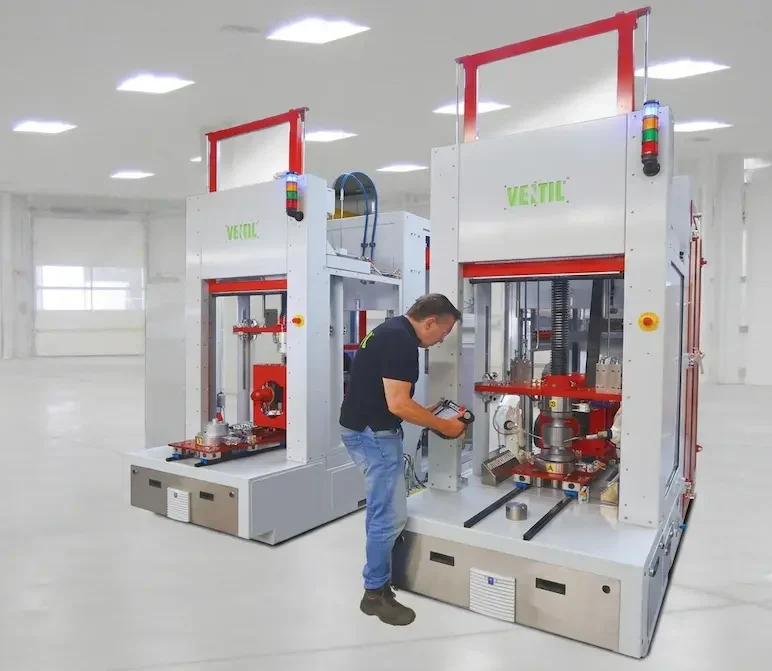
Ventil Test Equipment has been in business for more than 70 years, accumulating extensive experience in quality control and pressure testing over the last few decades. Despite the valve industry‘s daily innovations, pressure testing, particularly for Factory Acceptance Testing, has seen little significant advancement. However, in 2023, Ventil began designing and producing their most innovative and effective pressure test bench to date.
Pressure testing has evolved significantly over the past decades, especially after the introduction of Industry 4.0 principles. This critical step ensures that a produced valve is of sufficient quality and integrity to perform reliably after installation and to not cause direct, potentially catastrophic harm. While there are differences between applications, valve types and test standards, one thing is certain: all manufactured valves must be pressure tested to some extent. It‘s simply the law. Manufacturing environments sometimes perceive pressure testing as an interruptive process. It adds no additional value to the materials and, quite frankly, is often a slow and inefficient process requiring a lot of manpower. In fact, Ventil‘s experience with valve manufacturers concludes that 80 to 90% of production bottlenecks are directly related to pressure testing. This waste of potential can be optimised or solved by using the right technology. Let‘s break down and present Ventil‘s ultimate CNC test bench.
Save time on pressure tests
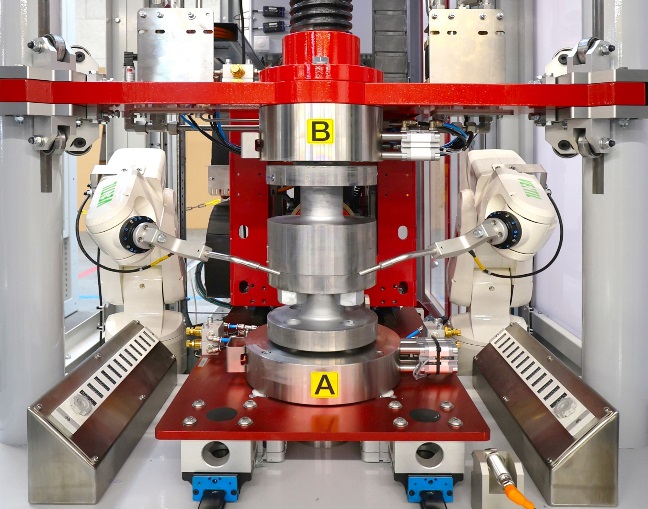
Every test performed consists of handling, setting up the tests and waiting time. The combination of these results in a cycle time which, ideally, matches the time to produce a single valve in the factory. Handling can be improved by automating steps, integrating ergonomic tools for the operator or even integrating robotics. A clever way of working will always improve the total cycle time. Today, the return on investment for integrating a robotic arm for loading and unloading is between 1 to 3 years, depending on the application and valve size. The ideal configuration would be a test cell consisting of a test bench and robotic arm, which can be loaded with valves and proceed to test each one without human interaction.
A key benefit?
It could run 24/7. More importantly, the robotic software is integrated into Ventil‘s in-house developed CNC valve testing software, which anyone can learn without the need for complex training. Setting up a test generally consists of process steps in the test bench to facilitate the test itself, such as a shuttle to load the valve, a clamping station to create a leak-tight seal and automatic opening and closing of the tested valve between body and seat tests. These steps generally make up 40% of the cycle time and can easily be improved by automation, eliminating waiting time for an operator, increasing the speed of the actions themselves and cleverly using consumables to increase their lifespan and reduce production interruptions. Ventil‘s selfand energised seals are a great example of how clever…..
Read more: