Ensuring safety, reliability and peace of mind
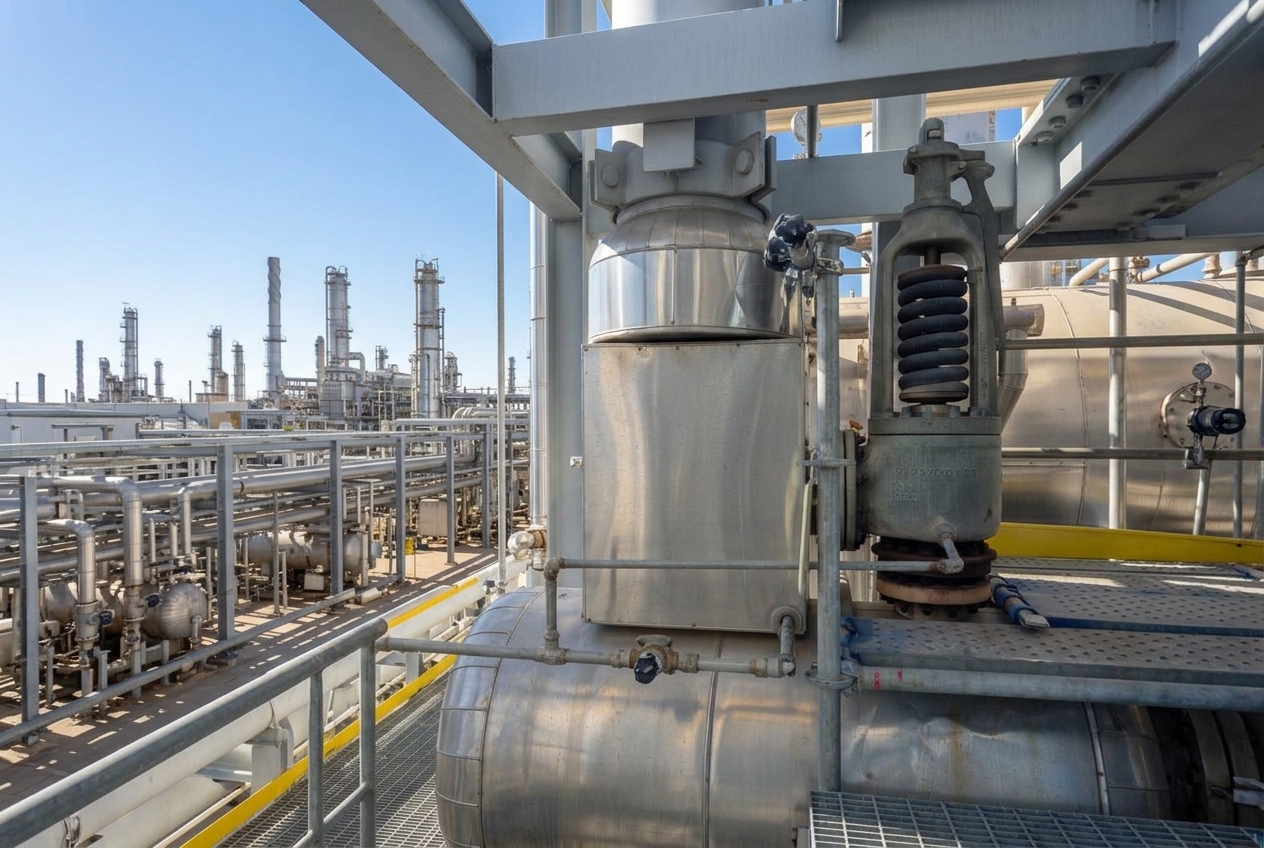
Pressure Relief Valve (PRV) testing is essential to ensure reliable overpressure protection and safe operation of critical systems. Testing verifies that valves open at the correct set pressure, provide the required relief capacity, and reseat properly after activation.
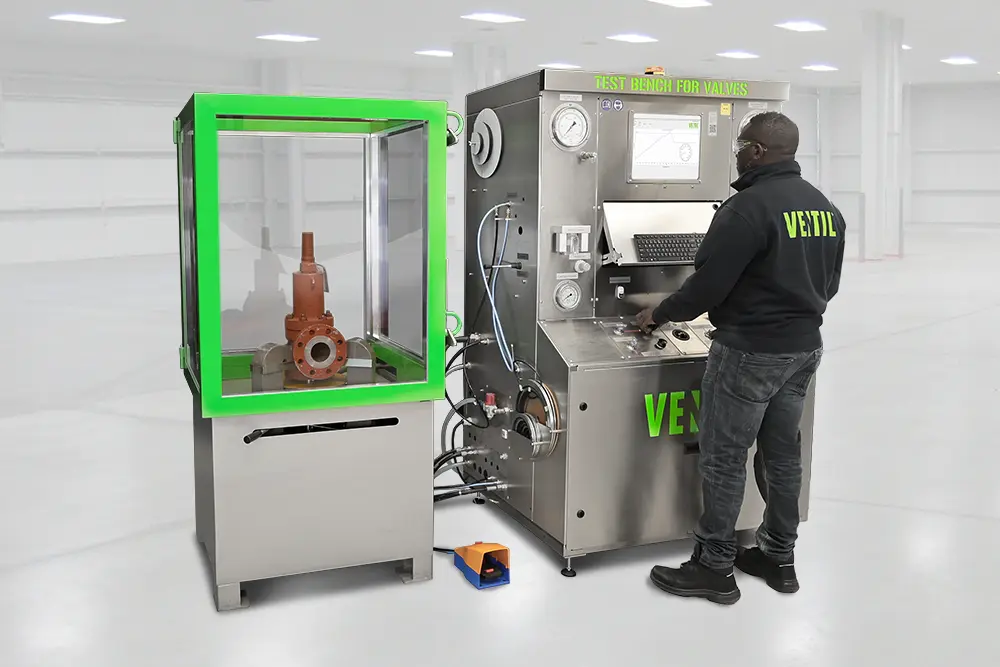
We provide a full scope of dedicated PRV test and repair equipment, enabling customers to perform accurate inspections, (re)calibration, functional testing and refurbishment. This supports reliable valve performance, helps prevent failures, reduces unplanned downtime, protects critical assets, ensures compliance with safety requirements, and improves overall process reliability.

Industry standards such as API 526, API 527, EN ISO 4126, PED 2014/68/EU and the ASME Boiler and Pressure Vessel Code define best practices for PRV testing and maintenance. Compliance with these standards helps ensure accurate, repeatable results while supporting regulatory requirements and plant safety.
With extensive expertise in both gas and liquid PRV testing, we can advise on the most appropriate testing methods, applicable industry standards and compliance requirements for your specific application.
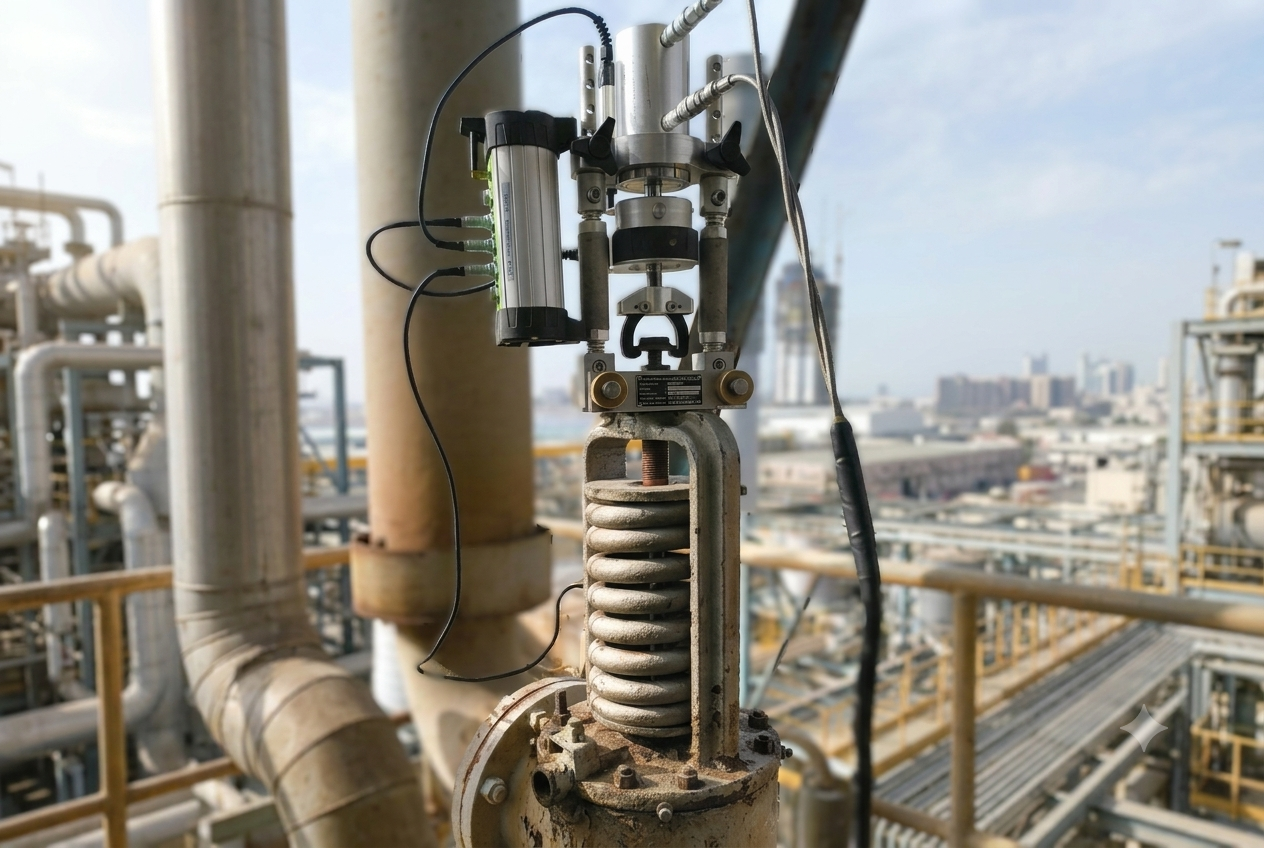
Choosing the right testing method depends on your operational needs. Traditional bench testing, requires valve removal but enables a complete inspection, repair and precise calibration. On the other hand, in-situ testing allows valves to be tested while they remain in service, minimizing downtime and providing performance data under real operating conditions.
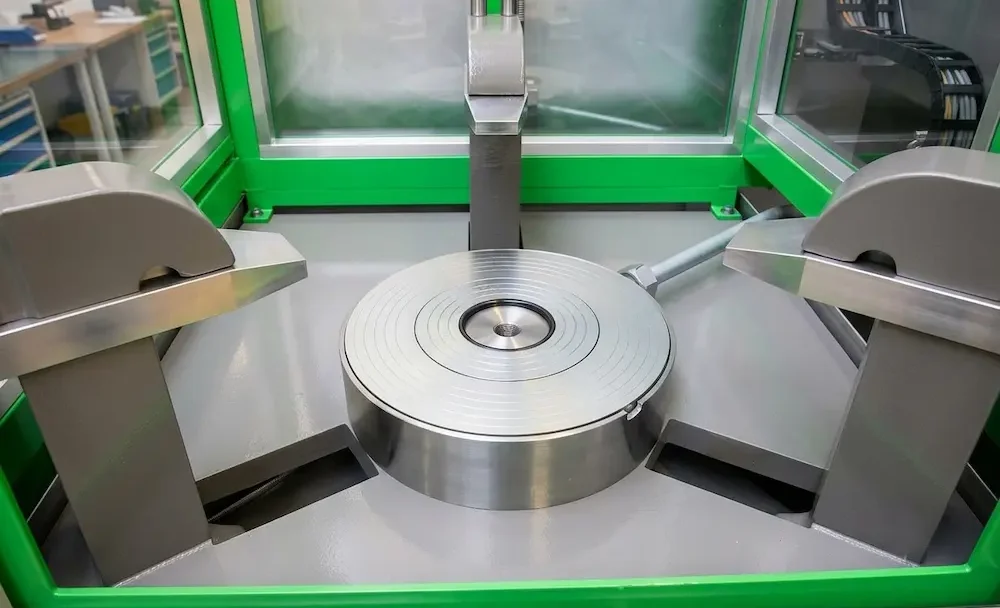
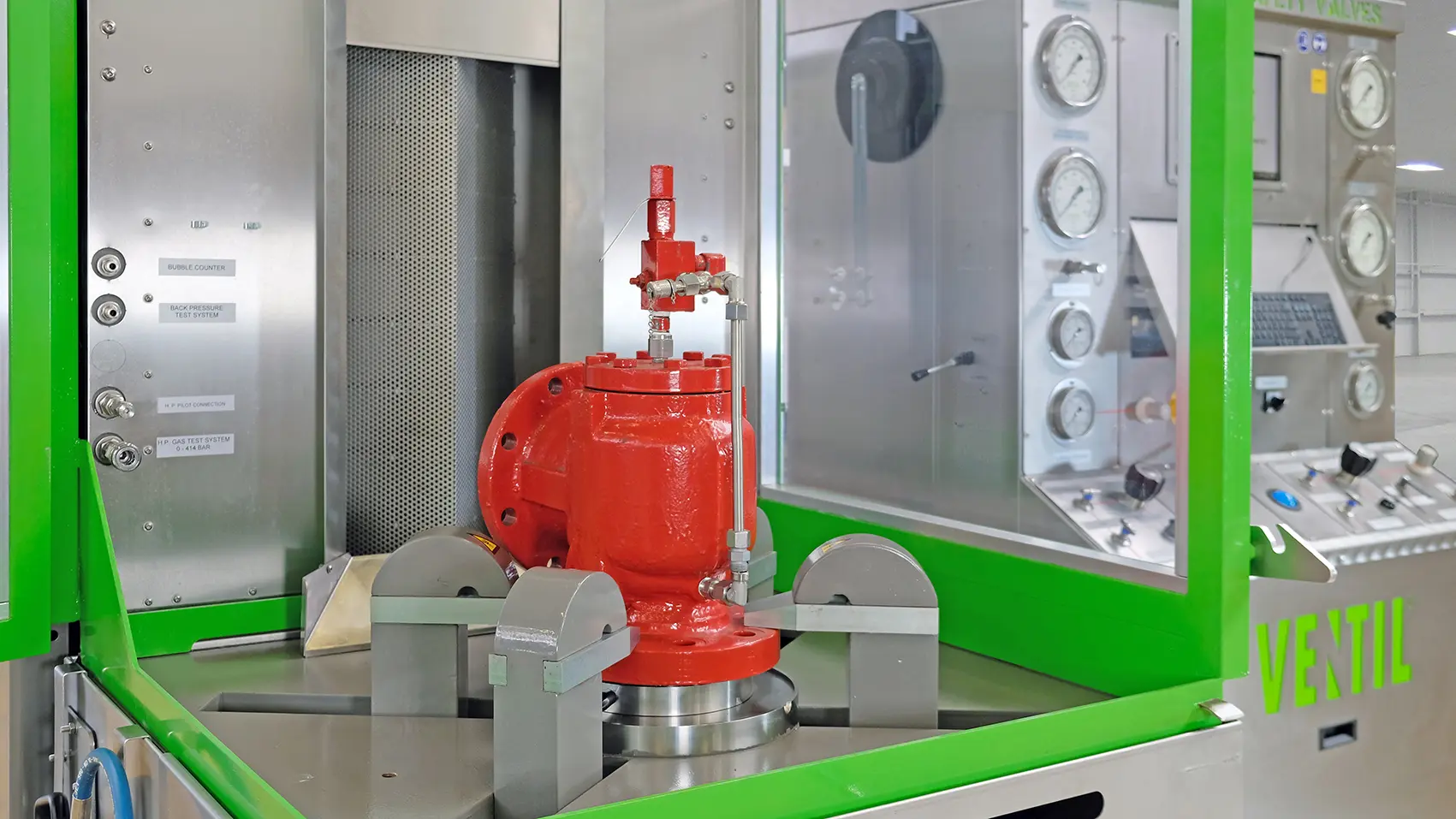
Because Pressure Relief Valves can be unstable due to their geometry and weight distribution, the VC test benches features a robust fixed stainless steel clamping table combined with vertically moving claws. This design ensures maximum stability during testing while preventing unwanted movement or misalignment of the valve.
After placing the valve on the stainless steel clamping table, the operator simply uses the ergonomic hand lever to move all three or four claws simultaneously towards the center. Once the claws overlap the valve flange, the foot-operated hydraulic activation switch securely clamps the valve on the inlet flange, ensuring a reliable and repeatable test setup.
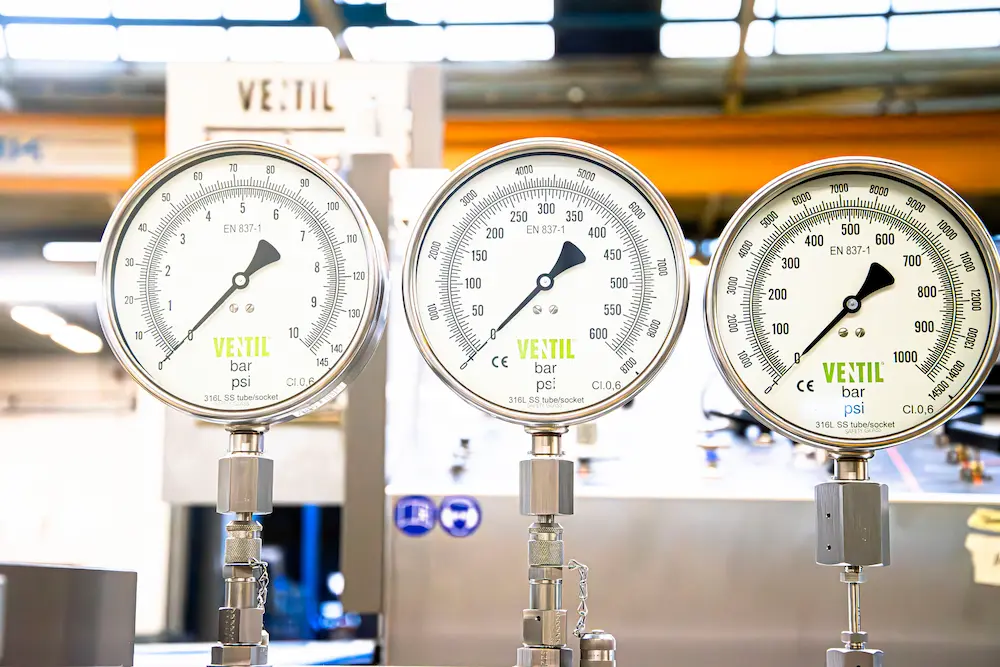
Our test equipment delivers precise measurement of set pressure, seat leakage and blowdown using calibrated instrumentation and automated data capture.
We know the drill when it comes to selecting the right equipment for the job, ensuring every solution is matched to your testing requirements.
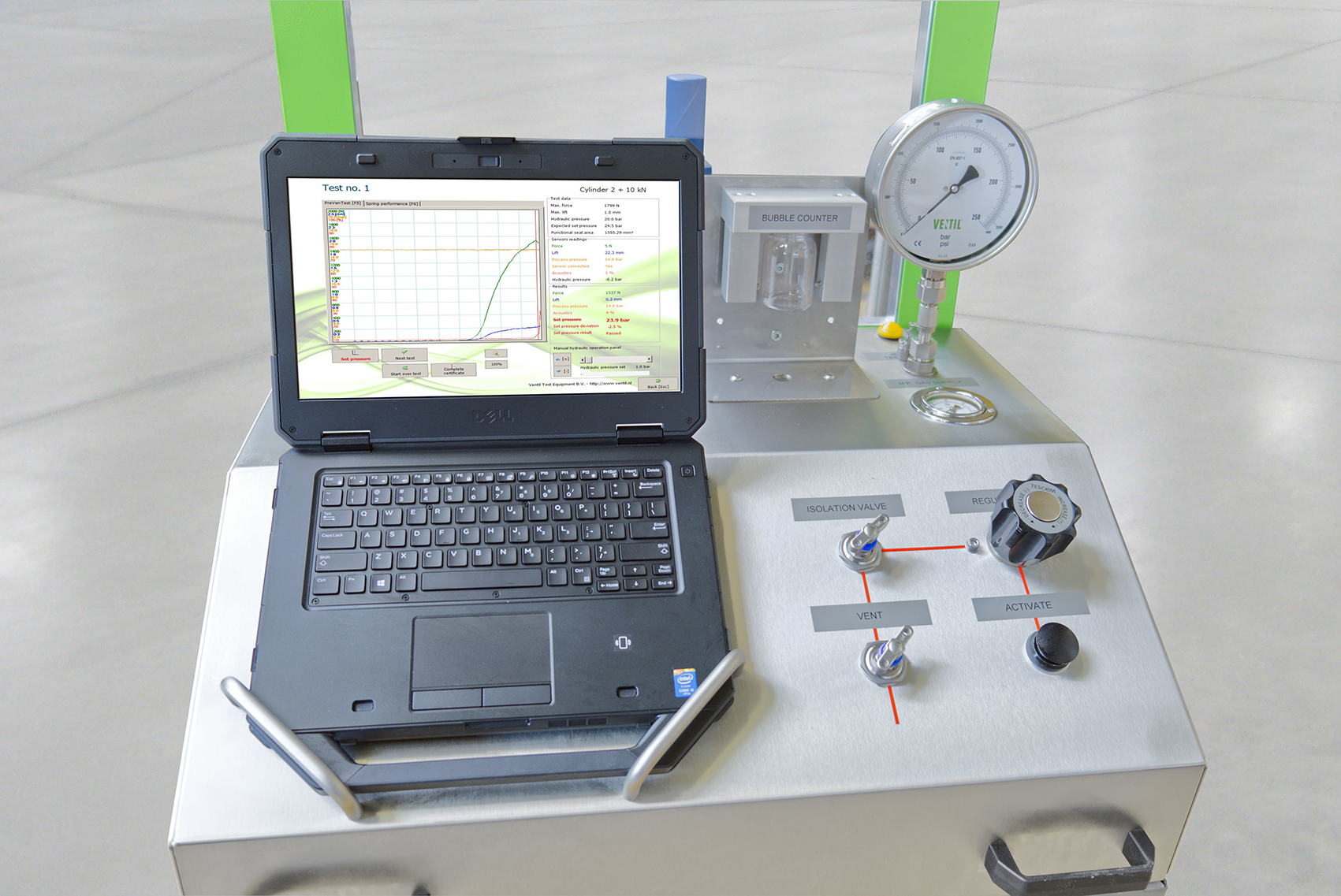
Accurate documentation is just as important as the test itself. That is why we have developed our own ‘CRS’ software platform to digitally record, structure and manage every essential detail of the valve testing process.
From valve identification and set pressures to results, adjustments, technician information and test dates, our system creates a complete and traceable maintenance history.
In addition, we are committed to meeting our customers’ specific needs by offering flexible solutions, including customized certificate layouts, ERP interfaces and even complex MES production integrations.
Thank you for your
requested quotation